Christine Torborg, Ph.D.
Founder, Decode NIH, NeuroStrategies, LLC
I founded Decode NIH to help organizations better understand how NIH works in practice and how to use NIH data and processes strategically. During my 15 years as a Senior Scientific Program and Policy Analyst at the National Institute of Neurological Disorders and Stroke (NINDS), I saw firsthand how difficult it can be for external stakeholders to interpret funding data, legislative activity, and policy decisions without context from inside the system. Decode NIH reflects my commitment to bridging that gap, enabling organizations to engage more effectively with NIH and advocate for research that improves lives.
At NINDS, I worked at the intersection of science, policy, and federal funding, focusing on legislative implementation, strategic planning, and portfolio analysis across a broad range of neurological disorders and fundamental neuroscience research. This experience provided a practical understanding of how NIH operates—how legislative language becomes programmatic action, how funding mechanisms function, and how decisions are made.
I received my Ph.D. in Neuroscience from the University of California, San Diego and completed postdoctoral training in the NIH Intramural Research Program before transitioning into science policy. My scientific training informs my approach to policy and portfolio analysis, grounding strategic insight in a deep understanding of biomedical research.
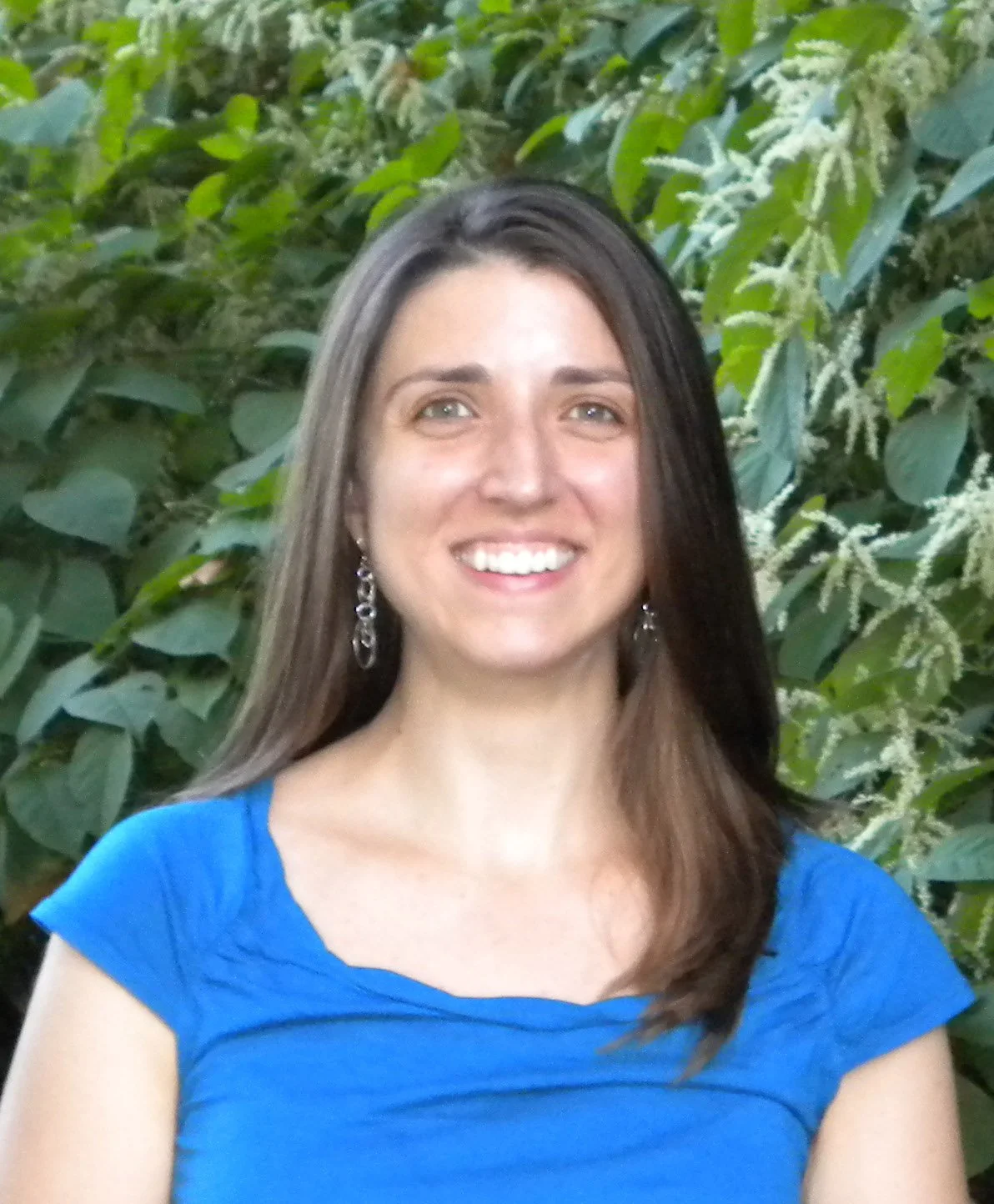
-
Senior Scientific Program Analyst and Policy Analyst, Office of Science Policy and Planning, NINDS/NIH, 2010 to 2025
Policy: Analyzed the scientific, legislative, budget, and advocacy landscape to advise NINDS leadership on strategies for achieving research and scientific workforce priorities. Built strong alliances with nonprofit organizations, professional societies, patient advocates, and federal agencies (FDA, CDC, DoD, and HHS) to drive shared goals in research and public health.
Legislative Activities: Managed Congressional communications and legislation implementation for neurological disorders, ensuring bipartisan support for research investments and sustained attention to patient need. Notable activities included:
Spearheaded implementation of the National Plan to End Parkinson’s Act (P.L. 118-66) by developing the implementation strategy and initiating establishment of the Advisory Council.
Directed implementation of the Accelerating Access to Critical Therapies (ACT) for ALS (P.L. 117-79), coordinating with the FDA and NIH and HHS offices to ensure compliance with federal regulations. Co-led a team of NINDS staff to execute a $75M annual appropriation to support novel expanded access clinical research studies and a large, multi-pronged public-private partnership to develop biomarkers and novel therapies for ALS
Strategic Planning: Developed strategic plans through workshops and stakeholder input, ensuring representation of diverse communities and experiences while engaging up to 100 non-federal researchers, clinicians, advocates, and people with lived experience and dozens of federal participants from across NIH, FDA, CDC, and DoD. Strategic planning efforts included:
2021-2026 NINDS Strategic Plan (intramural and extramural)
Alzheimer's Disease-Related Dementias: Research Challenges and Opportunities 2013
Amyotrophic Lateral Sclerosis (ALS) Strategic Research Priorities
Parkinson’s Disease 2014: Advancing Research, Improving Lives
NIH Strategic Plan for Tickborne Disease Research [led by NIAID]
Strategic Plan for Herpes Simplex Virus Research [led by NIAID]
Analysis and Evaluation: Co-led analysis activities across NINDS, ensuring high quality, consistent analyses of NIH programs to facilitate data-informed decision-making and transparent reporting to the public. Notable activities:
Planned and conducted the Age at First R01 Analysis, which continues to inform NINDS’s activities to support early-stage investigators and decrease the time for them to receive their first R01 grant. A videocast of this analysis can be found at https://videocast.nih.gov/watch=28139 beginning at 1:35.
Designed and carried out comprehensive Analyses of R21 grants that guided changes to R21 policies and funding opportunity announcements, resulting in a Joint NINDS and NIMH funding opportunity for R21 grants
Planned and coordinated the Trends in funding for Investigator-initiated Research Analysis, which was published in part in Back to Basics: A call for fundamental neuroscience research, and resulted in a grant program for Promoting Research in Basic Neuroscience and a Fundamental Neuroscience Working Group of the NINDS Advisory Council
Established NINDS database for manually coding grants for Congressionally mandated reports and portfolio analyses
Peer Review and Programmatic Support: Supported scientific review and programmatic activities by defining program scope, editing and publicizing funding opportunity announcements, facilitating peer review study sections, and developing funding plans. Notable activities:
Contributed to the design and implementation of the NINDS Landis Award for Outstanding Mentorship, a grant supplement program to recognize the contributions and importance of outstanding mentors, and led review subgroup for the Landis Award, reviewing 10-40 applications per year to select up to 5 awardees for a $100,000 grant supplement
Managed a $1 million contract with the National Academies of Sciences, Engineering, and Medicine to identify key actions the public, private, and nonprofit sectors should take to make ALS a livable disease within the next 10 years
-
Eunice Kennedy Shriver National Institute of Child Health and Human Development (NICHD) Intramural Research Program, 2005 to 2010
Postdoctoral Fellowship
Advisor: Dr. Chris McBain, Ph.D.
Led independent, research projects to identify ion channels subtypes in inhibitory interneurons and to evaluate the role of inhibitory interneurons in neuronal circuit function in a rodent model.
Awarded Pharmacology Research Associate Trainingship (PRAT) from NIGMS
University of California, San Diego. 2000 to 2004
Ph.D. in Neuroscience
Advisor: Dr. Marla Feller, Ph.D.
Dissertation: The role of patterned spontaneous retinal activity in the development of retinal projections
National Science Foundation Graduate Research Fellowship
Gustavus Adolphus College, St. Peter, MN, 1996 to 2000
B.A. in Biology and Chemistry
Summa Cum Laude
-
NINDS Outstanding Achievement Award for Advances in Therapeutics Development for Parkinson’s Disease Workshop Planning Committee (2024)
NIH Director’s Award for ALS Strategic Planning and ACT for ALS Implementation Team (2023)
NINDS Above and Beyond Merit Award for Collaboration in Implementing ACT for ALS (2023)
NINDS Spotlight on Science Merit Award for ALS Strategic Priorities Planning Team (2023)
NINDS Above and Beyond Merit Award for the Fundamental Neuroscience Working Group of Council (2023)
NINDS Above and Beyond Merit Award for exemplary leadership with people with lived experience (2023)
NINDS Above and Beyond Merit Award for ACT for ALS Implementation Team (2022)
NINDS Above and Beyond Merit Award for NINDS Clinical Director Review Team (2022)
NINDS Group Merit Award for 2021-2026 Digital Strategic Plan Team (2021)
NINDS Mentoring Award (2020)
NIAID Merit Award for Tickborne Diseases Strategic Planning (2020)
NINDS Group Merit Award for NINDS Strategic Planning Leadership and Coordination (2020)
NINDS Group Merit Award for NINDS Strategic Planning Extramural Taskforce (2020)
NINDS Group Merit Award for NINDS Strategic Planning Intramural Taskforce (2020)
CDC/CSEL Honor Award for Excellence in Partnering for the National Neurological Conditions Surveillance System (2019)
NINDS Group Merit Award for Grant Portfolio Analysis (2018)
NINDS Group Merit Award for ADRD Summit Planning Team (2016)
NINDS Group Merit Award (2015)
NINDS Group Merit Award for Parkinson’s Disease 2014: Advancing Research, Improving Lives (2014)
NIH Director’s Award for ADRD Planning Initiative Team (2014)
NINDS Group Merit Award for ADRD Summit Planning Team (2013)
NINDS Group Merit Award for Parkinson’s Disease Biomarkers Program Working Group (2012)
NINDS Group Merit Award for Analysis of Funding Trends Team (2012)
Neuron Award for outstanding poster—Synaptic Transmission Gordon Conference (2008)
Pharmacology Research Associate (PRAT) Program Fellowship (2006-2009)
National Science Foundation Graduate Research Fellowship (2000-2003)
Seaborg Travel Award to attend the Nobel Ceremonies in Stockholm (2000)
J.A. Edquist Award for Academic Excellence (2000)
Biology Department Assistantship (1999-2000)
Selma Lee Nobel Science Scholarship (1997-2000)
Partners in Scholarship Award (1996-2000)
Norelius Service Award (1996-2000)
-
Schor NF, Scott P, Litvina EY, Torborg C, Kim J, Zalutsky R, Adams AB. (2022) “Planning and Implementing Strategically: Year 1 of the NINDS 2021-2026 Strategic Plan” Neurology. Dec 12;99(24):1099-1107.
Schor NF, Scott P, Litvina EY, Torborg C, Kim J, Zalutsky R, Adams AB. (2022) “The NINDS 2021-2026 Strategic Plan: Partnership and cross-cutting principles.” Cell. Apr 28;185(9):1445-1448.
Corriveau RA, Koroshetz WJ, Gladman JT, Jeon S, Babcock D, Bennett DA, Carmichael ST, Dickinson SL, Dickson DW, Emr M, Fillit H, Greenberg SM, Hutton ML, Knopman DS, Manly JJ, Marder KS, Moy CS, Phelps CH, Scott PA, Seeley WW, Sieber BA, Silverberg NB, Sutherland ML, Taylor A, Torborg CL, Waddy SP, Gubitz AK, Holtzman DM. (2017) “Alzheimer's Disease-Related Dementias Summit 2016: National research priorities.” Neurology. Dec 5;89(23):2381-2391.
Sieber BA, Landis S, Koroshetz W, Bateman R, Siderowf A, Galpern WR, Dunlop J, Finkbeiner S, Sutherland M, Wang H, Lee VM, Orr HT, Gwinn K, Ludwig K, Taylor A, Torborg C, Montine TJ; Parkinson's Disease 2014: Advancing Research, Improving Lives Conference Organizing Committee. (2014) “Prioritized research recommendations from the National Institute of Neurological Disorders and Stroke Parkinson's Disease 2014 conference.” Ann Neurol. 2014 Oct;76(4):469-72.
Montine TJ, Koroshetz WJ, Babcock D, Dickson DW, Galpern WR, Glymour MM, Greenberg SM, Hutton ML, Knopman DS, Kuzmichev AN, Manly JJ, Marder KS, Miller BL, Phelps CH, Seeley WW, Sieber BA, Silverberg NB, Sutherland M, Torborg CL, Waddy SP, Zlokovic BV, Corriveau RA; ADRD 2013 Conference Organizing Committee. (2014) “Recommendations of the Alzheimer's disease-related dementias conference.” Neurology. Aug 26;83(9):851-60
Torborg CL, Nakashiba T, Tonegawa S, McBain CJ. (2010) “The temporal balance of feedforward inhibition during short term plasticity in the mossy fiber-CA3 circuit is developmentally regulated.” J Neurosci 30(46):15628-37.
Torborg CL, McBain CJ. (2009) “Properties of interneurons and their relation to excitability.” In: Philip A. Schwartzkrain, editors Encyclopedia of Basic Epilepsy Research, Vol 2. Oxford: Academic Press: 2009. p 625-630.
Torborg CL, Berg AP, Jeffries BW, Bayliss DA, McBain CJ. (2006) “TASK-like conductances are present within hippocampal CA1 stratum oriens interneuron subpopulations.” J Neurosci 26(28):7362-7.
Torborg CL, Feller MB. (2005) “Spontaneous patterned retinal activity and the refinement of retinal projections.” Prog Neurobiol 76:213-235.
Hansen KA, Torborg CL, Elstrott J, Feller MB. (2005) “The expression and function of the gap junction protein Connexin 36 in the developing retina.” J Comp Neurol 493:309-320
Torborg CL, Hansen KA, Feller MB. (2005) “High frequency, synchronized bursting drives eye-specific segregation of retinogeniculate projections.” Nature Neurosci 8(1):72-8.
Torborg CL, Wang CT, Muir-Robinson G, Feller MB. (2004) “L-type calcium channel agonist induces correlated depolarizations in mice lacking the beta2 subunit nAChRs.” Vision Res 44(28):3347-55.
Torborg CL, Feller MB. (2004) “Unbiased analysis of bulk axonal segregation patterns.” J Neurosci Methods 135(1-2):17-26.
McLaughlin T,* Torborg CL,* Feller MB, O’Leary DDM. (2003) “Retinotopic map refinement requires spontaneous retinal waves during a brief critical period of development.” Neuron 40(6):1147-1160. *These authors contributed equally to this work.
McCallum S, Hitchens TK, Torborg C, Rule GS. (2000) “Ligand induced changes in the structure and dynamics of a human class mu glutathione-S-transferase.” Biochemistry 39(25):7343-56.